
Why Healthy Cells Need More Than Nutrients to Function Well
Most conversations about health focus on nutrients.
Eat enough protein. Get your vitamins. Drink more water.
Those things matter, but they're only part of the picture.
Your body isn't simply a collection of nutrients. It's a living system made up of trillions of cells constantly working, adapting, repairing, and communicating with one another.
For those cells to function well, they need more than raw materials. They also need healthy biological systems that allow them to use those materials effectively.
That shift in perspective changed how I think about supporting my own health.
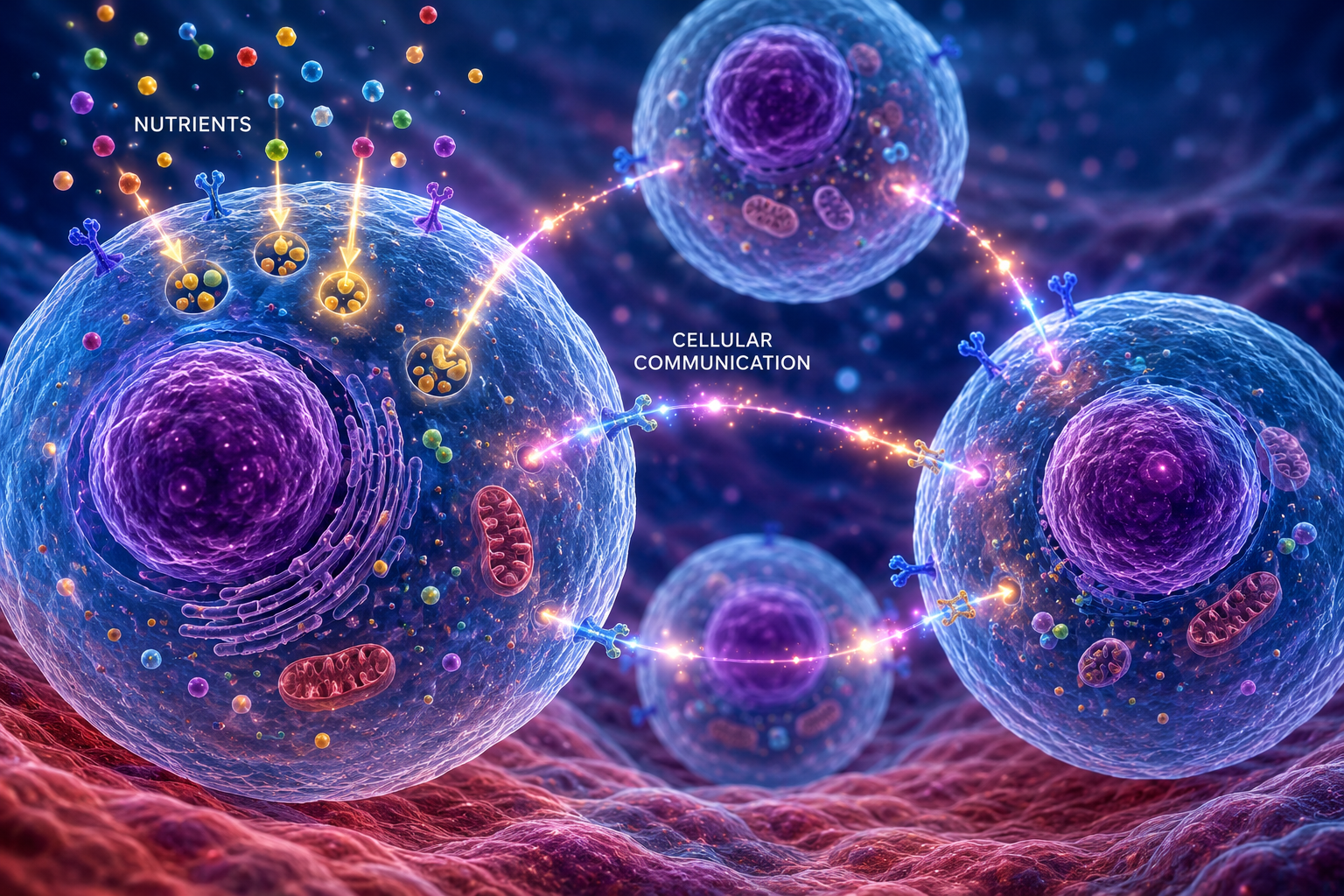
Image: Illustration of healthy human cells receiving nutrients while actively communicating with neighboring cells through glowing molecular signals.
Nutrition Is the Beginning, Not the End
If you were building a house, you would certainly need lumber, concrete, and nails.
But having a pile of building materials doesn't automatically create a home.
You also need workers, blueprints, communication, timing, and organization.
The same principle applies inside your body.
Your cells rely on nutrients, but they also depend on thousands of biological processes occurring at exactly the right time.
Enzymes, hormones, receptors, mitochondria, and cellular communication all play important roles in helping cells perform their normal functions.
Healthy Cells Are Constantly Communicating
One of the most fascinating discoveries in modern biology is just how much communication takes place between cells.
Cells continually exchange information about their environment, respond to signals, recognize neighboring cells, and coordinate countless normal biological activities.
Researchers studying glycobiology have found that glycans—complex carbohydrate structures attached to proteins and lipids—are involved in many of these recognition and communication processes.
That doesn't mean glycans are the only factor involved, but they are one important part of an incredibly sophisticated biological system.
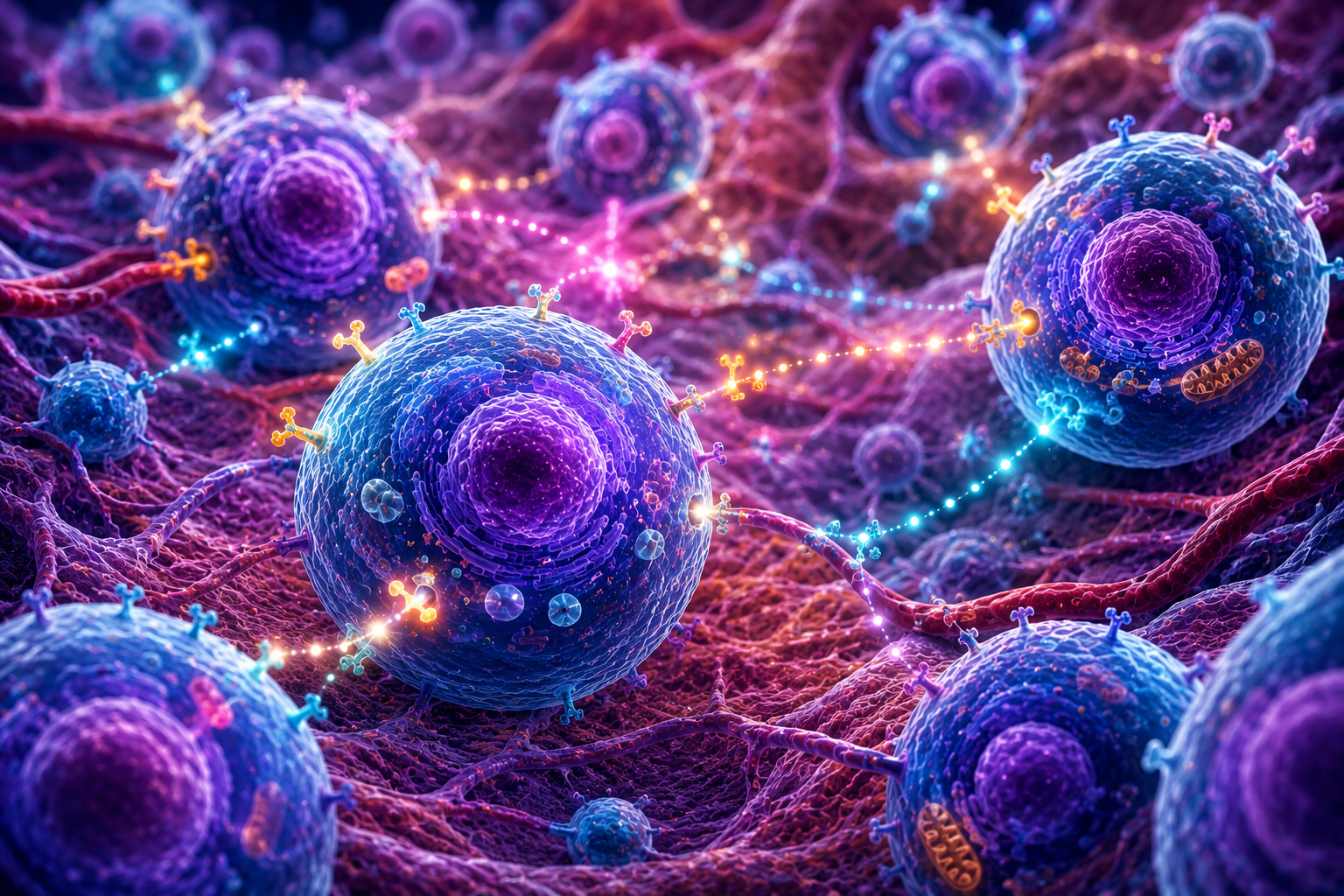
Image: Scientific illustration showing multiple healthy cells exchanging glowing molecular signals across a vibrant tissue environment.
Supporting Systems Instead of Chasing Symptoms
One lesson I've learned over the years is that supporting healthy systems often makes more sense than obsessing over isolated symptoms.
Good sleep supports recovery.
Movement supports circulation.
Whole-food nutrition supports countless cellular processes.
Stress management supports normal hormone balance.
Each healthy habit helps create an environment where your cells can perform the jobs they were designed to do.
That's a much different mindset than constantly looking for the next quick fix.
Small Daily Choices Add Up
Your body is constantly rebuilding itself.
Every day, cells are repairing tissue, producing energy, communicating with one another, and replacing older cells with new ones.
Those processes happen whether you think about them or not.
While no single habit guarantees perfect health, consistently supporting your body's normal biological systems gives those processes the best opportunity to function well.
For me, that realization has been far more valuable than searching for shortcuts.
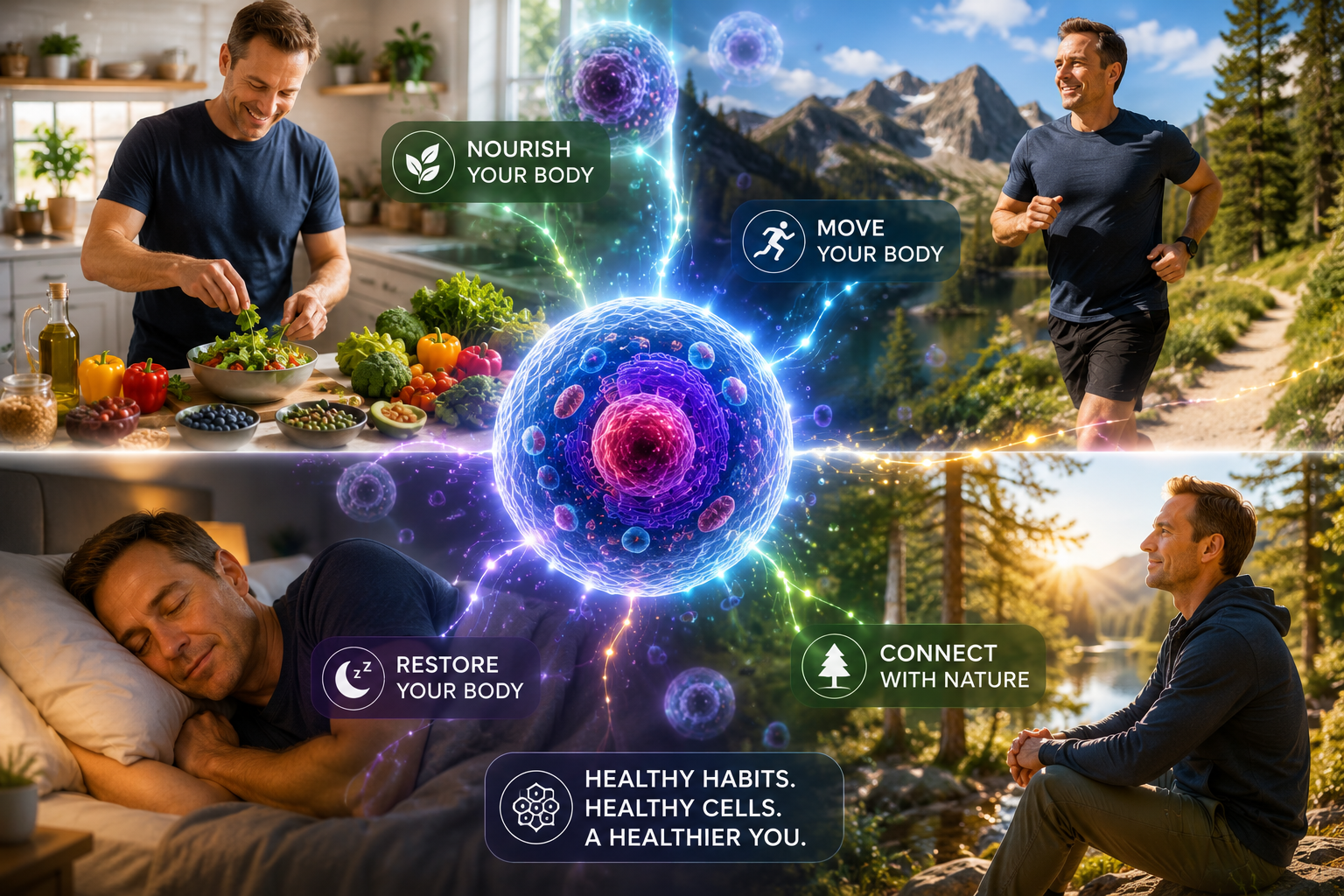
Image: Healthy person preparing colorful whole foods, exercising outdoors, sleeping peacefully, and spending time in nature, connected visually to healthy cells.
Final Thoughts
The more I study biology, the more respect I have for how incredibly complex the human body really is.
Health isn't simply about supplying nutrients.
It's about supporting the remarkable systems that allow trillions of cells to work together every second of every day.
That's one reason I continue learning about glycobiology and the many factors involved in healthy cellular communication.
If you'd like to learn more about one food-based approach I personally use to support healthy cellular communication as part of an overall healthy lifestyle, Learn more here.
About the Author
Lenny Morgan is passionate about helping people better understand the body's remarkable ability to maintain health when properly supported. His focus is on practical lifestyle habits, nutrition, and educating others about emerging areas of biology such as glycobiology and cellular communication.
Questions or comments? Reach out anytime at Lenny@LennyMorgan.com.